Christians and Fellow Heretics

Sunday, March 06, 2011

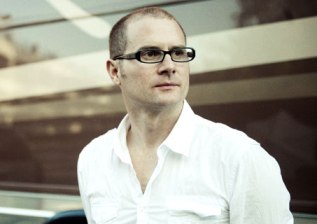
Heretization of pastor Rob Bell, Mars Hill Church, Grandville, Michigan, proceeds apace

Christians and Fellow Heretics Comment on  Christian Post article (Mar2,2k11)  -- I'll be writing some further reflections on this news report on the subject at hand.  See our earlier post, "Brother Justin lables brother Bell a heretic -- to hell with that!" (Feb27,2k11).  Please read that post which presents my own version of  'soteriological near-universalism.'  Among other things, it's impolrtant to make sure we don't confuse philosophical universalism -- like Thales' doctrine that all things are water (see Albert Wolters on DHTh Vollenhoven's problem-historical method in history of philosophy) -- with theological universalism in its Christian versions as it pertains to our set of doctrines in regard to salvation (soteriology), sin (hamartiology), hell (hellogy?), hades (OT), resurrection (OT--Daniel only, NT everywhere), election (NT see GC Berlkouwer's volume on Election and  one by an author named Botha on election, exegetically intense, especially on Romans (as I vaguely recall) translated from the Dutch original, published by Eerdmans (again, if memory serves me here, perhaps now out of print).   A commenter to the previous blog-entry on this theme offered further resources:  "have you read Gregory Boyd's book on trinitarian warfare theodicy (the problem of evil?) ... his last chapter is on the problem of Hell ... his resort is to C.S. Lewis and to Karl Barth, to explain a position that there is in fact Hell, but it is not the literal Hell we usually think is [that of which] the Bible speaks. It is nevertheless as Hellish as a lake of fire and brimstone, because it means being totally out of the Divine presence." Hat Tip to Romel!  -- Owlb


From:  Albert Wolters "On Vollenhoven's Problem-Historical Method" in


Hearing and Doing: Philosophical Essays Dedicated to H. Evan Runner 
edited by John Kraay and Anthony Tol. Wedge Publishing Foundation:
Toronto, 1979: 231-262

Problem of mythology and genesis
A. Mythologizing (theogono-cosmogenic)
B. Cosmogono-cosmological
C. Purely cosmological

Problem of dualism/monism
a. Dualism
b. Monism

Problem of universal/ individual

i. Universalism 
ii. Partial universalism 
iii. Individualism

Each intersection represents one basic type of conception. The one numbered “1,” for
instance, is the basic type of universalistic mythologizing dualism: it is represented,
according to Vollenhoven, by such disparate thinkers as Musaeus, Pythagoras,
Marcion, Manichaeism, the Cabala, and Sorel, to name only a few. 

A less esoteric basic type is that numbered “10”: [253] it represents the position of
materialists throughout the ages, from Thales and Democritus to Holbach and
Sartre.  © A M Wolters 24 of 35.


                  ----------------------------------------------------             


    Education

    |Wed, Mar. 02 2011 06:07 PM EDT

    Rob Bell Gets Evangelicals Talking 

    about Hell

    By Audrey Barrick|Christian Post Reporter    E-mail  Print  RSS

    An upcoming book by bestselling author and controversial preacher Rob Bell 

    has gotten a lot of evangelicals talking about hell. 

    Though his book, Love Wins: A Book About Heaven, Hell, and the Fate 
    of Every Person Who Ever Lived, is slated for release later this month, 
    a promotional video has already drawn claims of heresy.
    "Will only a few select 
    people make it to 
    heaven? ... And will 
    billions and billions of 
    people burn forever in 
    hell?" Bell, pastor of 
    Mars Hill Bible Church 
    in Grandville, Mich., 
    poses in the video.

    "Millions and millions
    of people were taught
    that the primary
    message, the center of
    the gospel of Jesus, is
    that God is going to
    send you to hell unless
    you believe in Jesus.
    So what gets subtly
    sort of caught and
    taught is that Jesus rescues you from God. How could that God ever
    be good? ... And how could that ever be good news?"
    He states in the video that the good news is that "love wins."
    Justin Taylor, vice president of Editorial at Crossway, responded to the video, saying Bell has laid his cards on the table about universalism.
    "I think that the publisher’s description combined with Bell’s video is sufficient evidence to suggest that he thinks hell is empty and that God’s love (which desires all to be saved) is always successful," Taylor said.
    The publisher (HarperOne)'s description reads:
    "[I]n Love Wins: Heaven, Hell, and the Fate of Every Person Who Ever Lived, Bell addresses one of the most controversial issues of faith – the afterlife – arguing that a loving God would never sentence human souls to eternal suffering. With searing insight, Bell puts hell on trial, and his message is decidedly optimistic – eternal life doesn’t start when we die; it starts right now. And ultimately, Love Wins."
    Taylor contended, "If Bell is teaching that hell is empty and that you can reject Jesus and still be saved, he is opposing the gospel and the biblical teaching of Jesus Christ."
    Taylor is just one of many evangelicals who have weighed in on the upcoming book.
    Gaithersburg, Md., pastor Joshua Harris tweeted that Bell was preaching a false gospel. Though the book is not out yet and he has yet to read it, he stressed that Bell's statements in the video alone are "concerning enough to be challenged."
    While concerns that a popular pastor like Bell could be leading a lot of Christians in the wrong direction continue to pour out on the Internet, the debate has also prompted pastors to address the topic of hell.
    "Hell," Harris stated, "is what our sin deserves."
    "Hell is what God in his love has rescued us from. And we are not rescued from hell by our merit or the rightness of our doctrine. We are rescued from God's wrath by the self-giving love and sacrifice of Jesus on the cross."
    But he added, "[T]here should be no glee or triumph in our tone in seeking to proving this biblical doctrine. Our hearts should break for the lost and for our own coldness of heart towards their spiritual condition."
    The conversation that's being had should lead Christians to redouble their prayers and evangelistic efforts, Harris stressed.
    Also joining the discussion, East Lansing, Mich., pastor Kevin DeYoung reminded the public of why God's wrath is necessary.
    "We need God's wrath to keep us honest about evangelism," he said. "We need God's wrath in order to: forgive our enemies; risk our lives for Jesus’ sake; live holy lives; understand what mercy means; grasp how wonderful heaven will be; be motivated to care for our impoverished brothers and sisters; and be ready for the Lord’s return."
    "Believing in God’s judgment actually helps us look more like Jesus. In short, we need the doctrine of the wrath of God."

    Labels: , , , ,

    Sunday, February 27, 2011

    Brother Justin labels brother Bell a heretic -- to hell with that!

    <p></p><p></p>


    Update:  If you're curious about the subject matter below, 
    particularly the fierce hereticizing of  Rob Bell becawz
    of a HarperCollins new book, Love Wins, by this 
    megachurch pastor around his seeming, to some, to be a 
    Universalist, I have a recommendation. Please click up and 
    read Tom Batterson's blog, Being the Body: Apostolic 
    dreams for the body of Christ, where in its entry for
    Feb26,2k11, entitled "Love Wins," the blogger takes up 
    brother Justin Taylor's fierce hereticizing of the bellwether  
    Bell for seeming to some to be some sort of Universalist. 
    Now, here's my blog entry of the same day -- Owlb --


    Love Wins


    And I had thawt the Gospel Coalition was more charitable and
    open-minded than what Justin Taylor exhibits here.
    Universalists.  I'm a soteriological near-universalist,  believing
    in the Interim State (death without the sting) where the
    Ascended Lord Jesus comes to each of us (as King, He holds
    each of us together in our human individuality, reconstitutively,
    so that we each can dream him and dialogue with him ("what
    dreams may come ... in that dream of death") -- he comes
    to each to teach, heal, prepare for us for the final judgment
    before the Throne of the Most Hi God of All Power who gave
    His Son for us, for the whole world.

    If we believe in Him after He has come to us as Christos 
    Paidwgos (see St Irenaeus on Christ the Teacher), we shall
    then be saved, whether we had been in this pre-life, or not.
    We firm believers in Christ today can hope riteously that
    (nearly) all humans -- indeed, also those who never heard
    the Gospel at all, due to our 'excellence' in mission 8-) --with
    its historically-recurring bloody trail and its list of sinful
    complicities) will be saved "body and soul" (all
    dimensions). As St Simone Weil (her nonRoman sainthood
    recognized by T. S. Eliot), declared, tho there is some  doubt
    she actually converted prior to her death,  A lot happens after
    death.

    We don't remain simply corpses; science teaches us that we
    ripple out into the universe, at least electro-chemically, carrying
    off and dispersing our info-load in particles/waves (wavicles),
    everything in our life leaving its forensic trace in God's
    providence for who we will yet be in the Resurrection.

    A lot happens after death, not least of all becawz of the
    Church's historical failure in its gospellizing mission, a lot
    happens both on our Lord's side of the inter-communication,
    and ours too.  We who sincerely confess Christ as both
    Saviour and Lord are still privileged, since our God-given
    Christian faith in this life gives such Elect a new
    self-conscious opportunity to take up the task where the
    Church had last messed up; indeed, our task now prepares
    us for our individual work of the Interim State (that's
    where my theological reflection nowadays dwells,
    individuality after death ... is there a social dimension even
    in that state? -- tentatively, I woud probably say, Yes).
    In any case, Christ our Lord is the Ultimate Evangelist,
    the evangelist we truly need in our death, so that this
    mortality may put on immortality (1 Corinthians: 15-54).
    We're then ready for the completeness of the Resurrection.

    Rob Bell seems to have struggled with these matters, tho
    perhaps Ibwoudn't agree with much of his book or many of
    his theological formulations.  I don't like those of Brian 
    McLaren much either.  But we don't have to hereticize these
    well-intentioned folks,  as all that such a procedure woud
    accomplish woud be to show we have nothing to say to these
    regarding the problems of theological thawt and Christian
    practice that they feel called to struggle with.  It's we then who
    are barren, old wineskins offering putrified wine. Let's not be
    putrified-winebibbers.  Rather,  don't we have an ecumenical
    responsiblity to the Lord not to simply cast aside our
    exploratory theologians of this day who come from the
    Evangelical mix and who try to re-learn an ethos of compassion in
    Christ?

    Poor brother Justin, all he can manage to do is bedeck a big red
    letter "U" around the neck of brother Bell -- why?  becawz that
    bellwether preacher-thinker won't stop chiming in with the Lord.

    As an antidote to Justin, read C. S. Lewis on George MacDonald
    (1824-1905),  an out-and-out Evangelical universalist who Lewis
    regarded as one of the greatest Christian literary minds with
    whom God had gifted us, and also the present Bishop of Durham,
    England, Dr. NT Wright, the most thawtful intellect with whom
    Evangelicals have been blest in these latter days -- in the video
    where he talks about the meaning of "Hell" in the New Testament
    (it ain't what bros. Justin and Kevin are giving us from the
    Reformed Scholasticism of another day).

    YouTubeServices; see refWrite's channel, yUT2ube for our full collection.

    Tho with Justin I do find some powerful stuff in the cited post
    by Kevin DeYoung on the Hell-theme.

    I consider my view as Reformed in the stream of a gestating,
    yet-to-be-born theology breaking free from Scholasticism
    in a radically reformational way, philosophically and
    scientifically informed, artistically engaged and willing to find
    a more biblical way than offered by Fundamentalism, whether
    Reformed or not, whether citing the neo-orthodox H. Richard
    Niebuhr or not.

    Indeed, Justin's quote from Niebuhr is a misuse becaws “a God 
    without wrath brought men without sin into a kingdom without 
    judgment through the ministrations of a Christ without a cross,” 
    The Kingdom of God in America (1937: 193) is apt for 
    describing the same Liberalism that J. Gresham Machen fawt
    from a Reformed Fundamentalist standpoint -- but even Machen
    gave room for Cornelius Van Til to pathbreak a different
    direction in their contestation with the oncoming spirits.  And,
    today, we can't go on mimicking either Niebuhr, Machen,
    Van Til, or the VanTillian who wanted to put all homos to
    death, Greg Bahnsen who has made Van Til's name a hissing
    sound.  But that's for the post of another day.

    -- Owlb


    JUSTIN TAYLOR|11:44 AM CT

    Rob Bell: Universalist?

    Note: I’ve added an update at the end of this post.
    John Piper once wisely wrote, “Bad theology dishonors God and hurts people. Churches that sever the root of truth may flourish for a season, but they will wither eventually or turn into something besides a Christian church.”
    It is unspeakably sad when those called to be ministers of the Word distort the gospel and deceive the people of God with false doctrine.
    But it is better for those teaching false doctrine to put their cards on the table (a la Brian McLaren) rather than remaining studiously ambiguous in terminology.
    So on that level, I’m glad that Rob Bell has the integrity to be lay his cards on the table about  universalism. It seems that this is not  just optimism about the fate of those who haven’t heard the Good News, but (as it seems from below) full-blown hell-is-empty-everyone-gets-saved universalism.
    Fans flock to his Facebook page, his NOOMA videos have been viewed by millions, and his Sunday sermons are attended by 10,000 parishioners—with a downloadable podcast reaching 50,000 more. An electrifying, unconventional pastor whom Time magazine calls “a singular rock star in the church world,” Rob Bell is the most vibrant, central religious leader of the millennial generation. Now, in Love Wins: Heaven, Hell, and the Fate of Every Person Who Ever Lived, Bell addresses one of the most controversial issues of faith—the afterlife—arguing that a loving God would never sentence human souls to eternal suffering. With searing insight, Bell puts hell on trial, and his message is decidedly optimistic—eternal life doesn’t start when we die; it starts right now. And ultimately, Love Wins.
    I haven’t read the whole book yet and was hesitant to say something based on the publisher’s description (which usually isn’t written by the author). But this video from Bell himself shows that he is moving farther and farther away from anything resembling biblical Christianity:
    Update: Thanks for all of you who have weighed in. I cannot respond to each comment, so I thought this might be the best way to make a few points.
    1) One of the things I get criticized for is having comments in the first place, but this is a place where you can tell me if you think I’ve done things wrong or in the wrong way. I want to be open to correction, and this is one forum by which to do it.
    2) I updated a couple of things on the original post. First, I deleted “seems to” with regard to Bell’s moving farther away from biblical Christianity. Second, I changed “unambiguous about his universalism” to “lay his cards on the table about universalism.” Third, I deleted the 2 Cor. 11:14-15 reference at the end. I do think it’s important to recognize the biblical theme that false teachers look like cuddly sheep and like angels of light. But let’s wait for the book so we can see all his cards laid out on the table.
    3) I have not read all of Bell’s book, though I have read some chapters that were sent to me. When the book is published there will be detailed reviews, and I will link to them. I think that the publisher’s description combined with Bell’s video is sufficient evidence to suggest that he thinks hell is empty and that God’s love (which desires all to be saved) is always successful. I should have been more careful in my original post not to imply that Bell is definitely a universalist. He may believe that some people go out of existence and are not thereby saved. The materials I have seen sound more like universalism though (note it sounds like no one goes to hell, and that the title promises to talk about the fate of everyone who has ever lived, which sure sounds like it’s the same for everyone).
    4) I highly doubt that this is a mere marketing stunt or that Bell is merely asking questions or playing Devil’s Advocate. If it turns out that the full book is diametrically opposed to his publisher’s description and to the conclusions he wants you to reach in the video, I will make that clear on this blog.
    5) If Bell is teaching that hell is empty and that you can reject Jesus and still be saved, he is opposing the gospel and the biblical teaching of Jesus Christ. You may think that’s judgmental to say that; I think it’s being faithful. I would encourage a careful study of 1 Timothy to see what Paul says about false teaching and teachers.
    6) For those who are not regular readers of this blog and think that the perspective advocated here is totally out to lunch, you may want to check out Kevin DeYoung’s post, “To Hell with Hell,” which gives a nice brief summary on the importance of understanding the wrath of God. As H. Richard Niebuhr wrote 75 years ago, too often we want “a God without wrath brought men without sin into a kingdom without judgment through the ministrations of a Christ without a cross,” Kingdom of God in America (1937), p. 193. Also see Denny Burk’s post where he seeks to answer Bell’s questions from a biblical perspective.
    7) Let’s remember to pray. Rob Bell needs to know and teach the liberating gospel of grace—including that Christ absorbed the Father’s wrath on behalf of those who trust in him and repent of their sins. And there are tens of thousands of folks who look to Rob Bell as a biblical teacher and leader. May God give much mercy.

    Labels: , , , , , , , , , ,